Design Flow With Your Core Body Temperature Rhythm: Tuning Focus From the Inside Out
Your core temperature swings about one degree over each day, and that swing is tightly linked to focus, creativity, and physical performance. Learn how to match tasks to the rising, peak, and falling phases of your core temperature to lift the quality of your immersion.
Why "Same Task, Same Hour" Doesn't Always Produce the Same Depth of Flow
The same document that took an hour on Monday takes three hours on Thursday. Everyone has had this experience. It is easy to blame willpower or personality, but a major driver is the rhythm of your core body temperature rising and falling inside you.
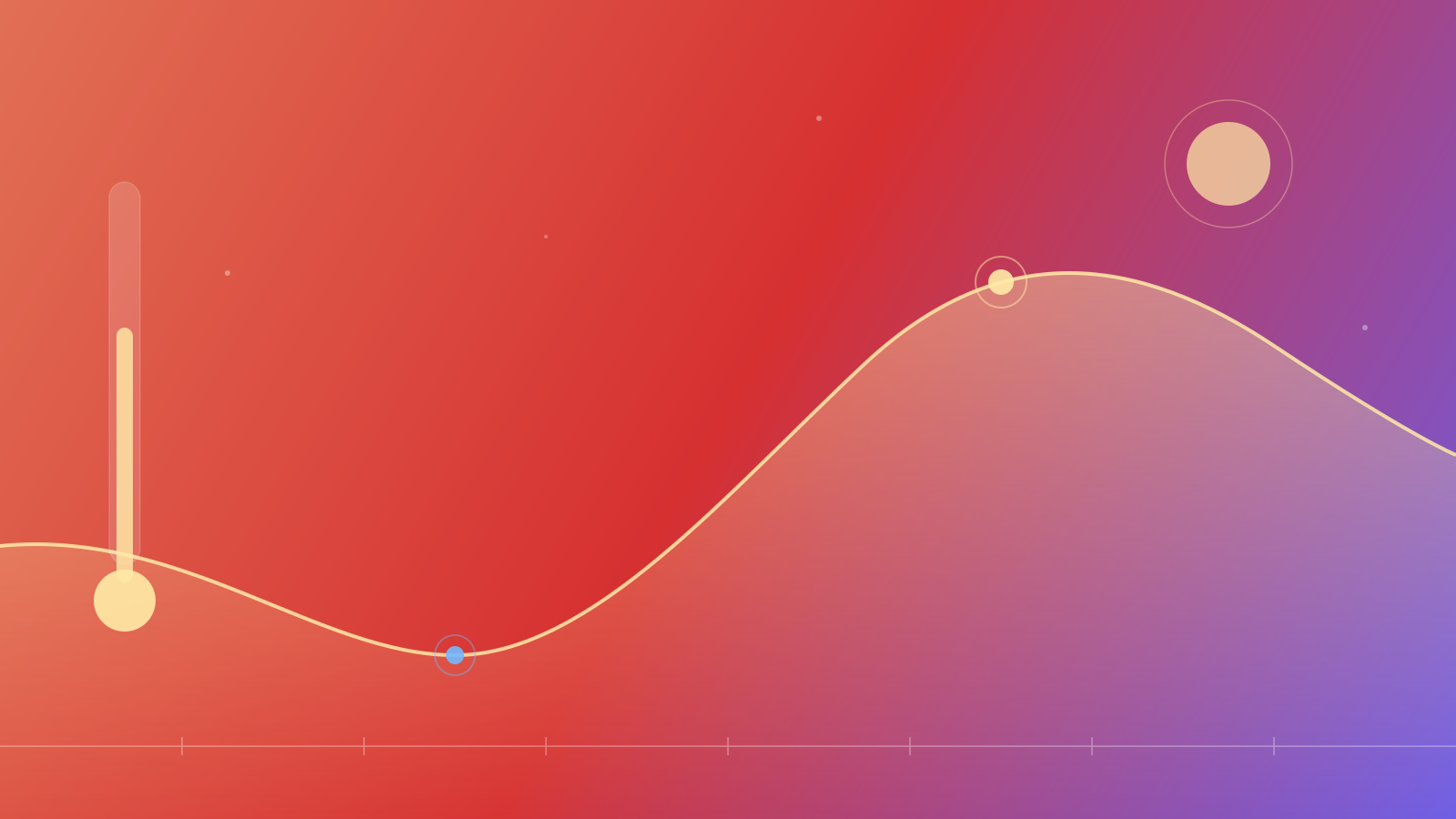
Core temperature is the heat of your brain and internal organs, distinct from skin temperature and largely insulated from weather. Over a day, it swings smoothly across roughly 36.0–37.0°C (96.8–98.6°F). Near the peak, focus, reaction time, and memory encoding rise; near the trough, sleepiness and sluggish thinking emerge.
If flow is "something that arrives when conditions align" rather than "something you will into existence," there is no reason not to enlist the most basic condition of all: your core temperature rhythm.
The Three Phases of the Core Temperature Rhythm
A day can be divided into three rough phases.
Rising phase (wake-up → midday → afternoon) Lowest just after waking, climbing steadily. For typical schedules, the peak lands around 4–6 p.m. The first half of the rising phase (2–4 hours after waking) favors verbal and analytical tasks that demand sustained concentration.
Peak phase (late afternoon to early evening) Temperature is at its highest, and so is physical performance. Strength output, reaction time, and endurance peak here, making it ideal for exercise and sport. For knowledge work, heavy tasks requiring judgment and energy move best now.
Falling phase (two hours before bed → sleep) Core temperature drops sharply in the evening, triggering sleepiness. The fall itself is the sleep onset signal. During this phase, avoid new input and instead use the window for review, creative association, or leisurely reading—"interpretive" and "integrative" work.
People who treat the up-and-down of temperature merely as "sleepy or not" transform their daily structure once they treat these three phases as an axis of flow design.
Rising Phase: The Morning Golden Window
Two to four hours after waking, with core temperature gradually rising, prefrontal cortex performance is at its daily peak. This is the zone for deep thinking, verbal work, and analysis.
Tasks that fit morning - Drafting proposals and outlines - Writing important emails and prose - Designing or refactoring code - Verifying numbers and budget work
Avoid slotting routine admin work or casual meetings into this window. Spending this scarce focus currency on easy tasks is the most expensive mistake of the day.
The 90-minute rule In the first 90 minutes after waking, temperature is still low and the brain has not yet warmed up. Fill it with light stretching, breakfast, a shower—activities that gently raise the temperature—and start serious cognitive work 90–120 minutes after waking. Flow arrives more easily that way.
Peak Phase: For the Body and for Judgment
The late-afternoon peak is a time when body and judgment are both sharp.
Tasks that fit the peak - Gym, running, and sports - Decisions and judgment-heavy meetings - Live presentations - Final integration of the day's most important work
A post-lunch dip around 1–2 p.m. makes many people sleepy, but temperature climbs again after 3 p.m. toward the evening peak. Reserving one hour in the late afternoon for the day's most important finishing work produces a different flavor of flow from the morning session.
One Wednesday evening, the conclusion of a proposal I had struggled with all morning landed in place the moment I sat down at 5 p.m. The morning had been meticulous flow that accumulated detail; the late afternoon was an integrative flow that pulled the pieces together. Same me, different flow—because of the time of day.
Falling Phase: For Interpretation and Integration
From dinner to bedtime, core temperature eases down. This is the wrong window for launching new work, but surprisingly right for interpretation, integration, and creative association.
Tasks that fit the falling phase - Daily review, journaling - Reading (essays, literature) - Handwritten idea notes - Conversation with family and friends - Slow music listening
As the prefrontal cortex eases, the default mode network rises, and unconscious associations appear more readily. The day's information settles, and the seed of tomorrow's insight is quietly planted now.
Limit screens 1–2 hours before bed Core temperature starts its steep descent about two hours before sleep. Screen light suppresses the drop; stimulating content reactivates the prefrontal cortex. From 90 minutes before bed, step away from screens and move to paper books, notebooks, or dim-light conversations to fully harvest the falling phase.
Three Everyday Proxies for Core Temperature
Core temperature is hard to measure directly, but three daily proxies let you track it.
1. Hand and foot temperature When core temperature rises, hands and feet feel cool; when it falls, they feel warm (heat dissipation). Warm hands at night are a sign the core is dropping into sleep mode.
2. Changes in focus quality Track the toggle between "crisp-minded" and "foggy." A week of notes will reveal your personal peak window.
3. Appetite for physical activity Hot times of day pull you toward movement. The sense of "I could move now" is a core-temperature signal.
Some smartwatches estimate core temperature, but the three subjective observations above are enough to map your own rhythm.
Chronotype: Not Everyone Is the Same
There is wide individual variation. The biggest factor is chronotype (morning vs. evening preference), shaped by both genes and habits.
Morning type (~20%) Peak around 2–5 p.m.—earlier than average. Morning golden time is long; late-night work loses efficiency as the drop comes fast.
Intermediate type (~60%) Peak around 4–6 p.m. Standard rhythm; the template in this article applies directly.
Evening type (~20%) Peak around 6–9 p.m.—later than average. Core temperature stays low for three to four hours after waking, so early meetings underperform, while deep evening flow is accessible.
Copying a morning type's schedule without knowing you are an evening type works against your own rhythm. Spend two or three weeks logging wake time, meal times, and focus peaks to identify your type; afterward, your designs stop drifting.
Actively Nudging Core Temperature
Observation isn't the only tool. You can actively move the rhythm.
Morning shower to lift temperature A slightly warm morning shower accelerates the rise. The gap before serious work shrinks.
Keep lunch light A heavy lunch diverts blood flow to digestion and deepens the afternoon dip. If late-afternoon flow matters, lean toward a lighter, lower-carb lunch.
Short afternoon movement A 10–15 minute walk or stair climb around 3 p.m. sharpens the evening peak.
Evening bath to raise-then-drop A 15-minute bath at 38–40°C (100–104°F) about 90 minutes before bed triggers a strong post-bath heat release, pulling core temperature down and deepening sleepiness. A technique for upgrading the falling phase.
At the dinner table with family, simply noting "my sharpest stretch was the morning today" begins to shift tomorrow's scheduling. Your temperature rhythm is invisible to others but sensed only by you—an inner clock. Listening to that clock is what lifts flow frequency over the long run.
When Body Time Aligns, So Does Mind Time
Deep flow includes a transformation of time perception. Time races during concentration; a fulfilled day feels rich in hindsight—and that subjective time is tightly connected to core temperature. Align temperature, and focus aligns; align focus, and the day aligns.
No expensive devices or complicated apps are needed. Starting tonight: keep the first two hours after waking for intellectual work, the evening peak for heavy tasks, and the falling phase for quiet review. Just that three-phase scaffolding begins to shift both the frequency and the depth of flow.
On a busy weekday evening, after the children are asleep, look at tomorrow's time plan and ask, "What should land in the morning?" That small act of planning, repeated, becomes a way of living that follows the rhythm of your own body. Rather than being pushed by externally assigned deadlines and meetings, design the day around your core temperature—your body's clock. The view from there looks a little different from yesterday.
About the Author
FlowState Hub Editorial TeamWe share the science of flow in a way that is easy to understand and applicable to modern life.
View author profile →Related Articles
Borrow Wisdom to Enter Flow: Turning Great Quotes Into Personal Flow Triggers
Enter Flow Just by Counting Steps: Turn Daily Walking Into a Practice of Immersion
Invite Flow With Time Boxing: The Ultimate Productivity Practice of Putting Time Into Boxes
Growing Intrinsic Motivation With a Small Wins Journal: The Record-Keeping Habit That Accumulates Flow